Purcell Commercial HVAC

Author name: sonu

Commercial HVAC in Calgary
Blog

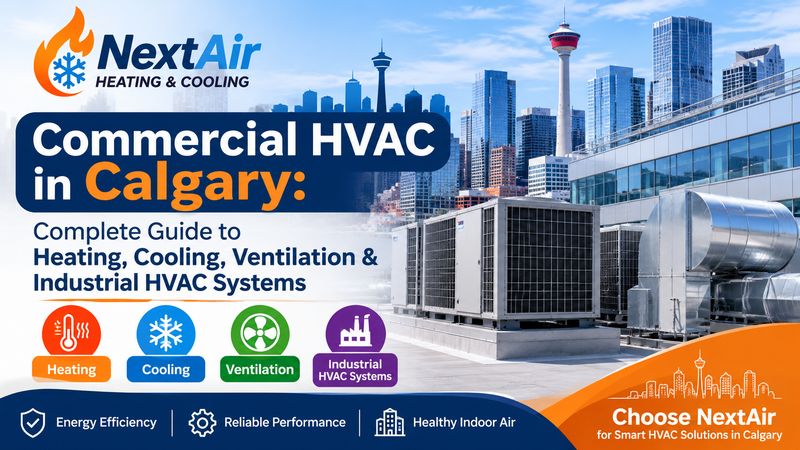
Commercial HVAC in Calgary: Complete Guide to Heating, Cooling, Ventilation & Industrial HVAC Systems

A warehouse that can’t hold temperature in January, a rooftop unit that quits during a July heat wave, a shop where fumes linger because the ventilation can’t keep up: these problems cost businesses money, productivity, and sometimes safety. Commercial HVAC Calgary property owners rely on has to handle more than comfort. It protects inventory, equipment, and the people working in your building through some of the most demanding weather in Canada. This guide explains how commercial and industrial HVAC systems work, which equipment is common in Calgary buildings, what typically goes wrong, and how to choose a service provider. It’s written for business owners, property managers, and facility operators who want clear information before making a decision. What Is Commercial HVAC and How Does It Work? Commercial HVAC (heating, ventilation, and air conditioning) is the set of systems that heat, cool, ventilate, and control the air quality of non-residential buildings such as offices, retail units, warehouses, workshops, and industrial facilities. These systems move heat and air to keep a building within a target temperature and bring in enough fresh air to meet ventilation needs. How Is Commercial HVAC Different From Other Systems? The main differences are scale, variety, and purpose. A commercial building may have large open volumes, high ceilings, several temperature zones, process equipment that produces heat or fumes, and long operating hours. Equipment is usually larger and often roof-mounted or suspended from the ceiling to save floor space. A single building may combine several types of equipment: a rooftop unit for the office area, unit heaters in the shop, and a make-up air unit to replace exhausted air. Because of this, commercial HVAC is rarely one-size-fits-all. The right system depends on the building’s size, layout, insulation, use, and occupancy. The Main Components of a Commercial HVAC System Most systems are built from a handful of building blocks: When one component is undersized, neglected, or poorly controlled, the rest of the system often pays for it through higher running costs, uneven temperatures, or premature failure. Why Calgary’s Climate Changes the Equation Calgary’s weather is demanding on mechanical equipment. Winters bring extended cold, and temperatures can drop well below -20°C. Chinook winds can then lift temperatures by many degrees within hours, which means heating systems may cycle hard and fast. Summers can be hot and dry, and cooling demand has become a real consideration for many buildings that once only worried about heat. In practical terms, this means: Commercial HVAC Services Available in Calgary A commercial HVAC contractor typically covers a range of work, from routine maintenance to full system design. Here is how the main service areas fit together for Calgary businesses. Purcell Commercial HVAC provides commercial and industrial services across these categories. Heating Heating is the backbone of commercial HVAC in Calgary. Depending on the building, this can include commercial furnaces, unit heaters, radiant systems, or heat pumps. The right choice depends on ceiling height, how much of the building is occupied at any one time, and how much outside air the building must bring in. Cooling and Heat Pumps Cooling in commercial buildings is commonly delivered by rooftop units, split systems, or commercial heat pumps. Heat pumps move heat rather than generating it by combustion, and can provide both heating and cooling. Their suitability for a given Calgary building depends on the building’s design and how the system is configured for cold weather, which is worth discussing with a qualified contractor. Ventilation and Exhaust Ventilation keeps indoor air fresh and removes moisture, odours, fumes, and heat. Commercial exhaust fans pull air out of kitchens, washrooms, workshops, and process areas. Whenever air is exhausted, the building needs to replace it, which is where make-up air comes in (covered below). Commercial Refrigeration Restaurants, grocers, food producers, and cold-storage operators depend on commercial refrigeration to protect products. A refrigeration failure can mean spoiled inventory within hours, so fast, competent repair matters. Maintenance, Emergency Repair, and System Design Three service types cut across all of the above: Understanding Commercial Make-Up Air Systems What Is an Air Makeup Unit and Why Do Buildings Need One? An air makeup unit is a piece of equipment that brings filtered outdoor air into a building to replace air removed by exhaust fans, process equipment, or combustion appliances. Without it, a building can end up under negative pressure, which creates problems that range from annoying to unsafe. Make-up air systems matter most in buildings that exhaust a lot of air: commercial kitchens, auto and welding shops, paint or spray areas, woodworking facilities, and many industrial spaces. In Calgary, make-up air is also a heating issue. Incoming winter air can be very cold, so many units are designed to heat the air before it enters space. Explore how this equipment is applied on our commercial make-up air units page. Signs Your Building Needs Make-Up Air Watch for these symptoms, which often point to inadequate make-up air: Combustion appliances that can’t vent properly can create carbon monoxide risks. If you suspect a venting issue, treat it as urgent and have it assessed by a qualified professional. Common Make-Up Air Problems Common issues include clogged filters, failed burners or ignition components, faulty sensors, dampers that stick or don’t modulate, belts and motors that wear out, and controls that aren’t coordinated with the exhaust fans. Many of these are found early during routine inspection. A unit that is working but poorly matched to the building’s exhaust load is also common, especially after a facility has changed how it uses the space. Commercial Rooftop Units and Their Maintenance What Is a Rooftop Unit? A rooftop unit (RTU) is a packaged HVAC system installed on a building’s roof that provides heating, cooling, and ventilation through ducts into the space below. Many retail stores, offices, restaurants, and light industrial buildings in Calgary use them because they free up interior space and are relatively simple to service from above. See our overview of commercial rooftop units for more. What Does Rooftop Unit Maintenance
Make-Up Air Units vs. Exhaust Fans: What Calgary Businesses Need to Know
Blog

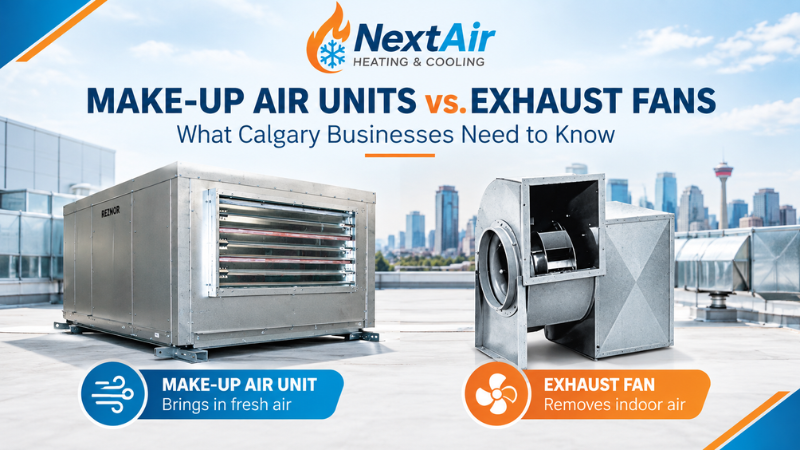
Make-Up Air Units vs. Exhaust Fans: What Calgary Businesses Need to Know

Commercial buildings rely on effective ventilation to maintain indoor air quality, manage airflow, and create a comfortable working environment. For businesses operating commercial kitchens, warehouses, manufacturing facilities, automotive shops, and other industrial spaces, two essential components are make-up air units and exhaust fans. Although these systems perform different functions, they often work together to maintain proper building ventilation. For example, when an exhaust fan removes air without an adequate replacement air supply, a building may develop negative pressure. As a result, occupants may experience uncomfortable drafts, reduced ventilation performance, and increased heating demands. Understanding how commercial make-up air units differ from exhaust fans can help Calgary business owners make informed decisions about ventilation system design, maintenance, and repairs. What Is a Commercial Make-Up Air Unit? A commercial make-up air unit (MUA) supplies outdoor air to replace the air that exhaust fans, kitchen hoods, and other ventilation equipment remove from a building. In many commercial applications, the system filters and heats outdoor air before supplying it to occupied spaces. This step becomes particularly important in Calgary, where cold winter temperatures can make untreated outdoor air uncomfortable and increase indoor heating demands. Depending on the application, a make-up air unit may include filters, heating components, supply fans, temperature controls, and other equipment that delivers the required airflow. Businesses commonly use commercial make-up air units in: With proper design and installation, a make-up air system helps balance incoming and outgoing airflow. Consequently, it supports indoor comfort and helps exhaust equipment operate as intended. What Is a Commercial Exhaust Fan? A commercial exhaust fan removes unwanted air from a building or a specific area. Depending on the application, this air may contain excess heat, moisture, cooking odours, airborne contaminants, or other substances that require safe removal. Commercial HVAC professionals install exhaust systems on rooftops, exterior walls, and within dedicated ventilation ductwork. The installation location depends on the building layout and the type of air the system needs to remove. Typical applications include: The building’s use, ventilation requirements, and the materials being removed determine the appropriate fan type, capacity, and placement. For effective performance, the exhaust fan must also work with the building’s overall ventilation strategy. Otherwise, the system may remove air faster than the building can replace it, potentially creating pressure imbalances. Make-Up Air Units vs. Exhaust Fans: Key Differences The main difference is simple: an exhaust fan removes indoor air, while a make-up air unit supplies replacement outdoor air. Feature Make-Up Air Unit Commercial Exhaust Fan Primary function Supplies replacement outdoor air Removes unwanted indoor air Airflow direction Into the building Out of the building Typical equipment Supply fan, filters, heating components, and controls where required Fan, motor, housing, and associated controls Main purpose Supports air balance and replacement air supply Removes heat, moisture, odours, and contaminants Common applications Commercial kitchens, warehouses, and industrial facilities Kitchen hoods, workshops, and industrial exhaust systems Maintenance priorities Filters, burners where fitted, motors, controls, and airflow Fan blades, belts where fitted, motors, bearings, and airflow Neither system automatically replaces the other. Instead, a building may need an exhaust fan, a make-up air unit, or a coordinated combination of both. The right choice depends on the facility’s ventilation requirements and operating conditions. Why Commercial Buildings May Need Both Systems Whenever an exhaust fan removes indoor air, replacement air must enter the building. If the intended replacement air supply cannot keep up, the building may develop negative pressure. Negative pressure occurs when more air leaves a space than enters through the intended supply and other available openings. In commercial buildings, this imbalance can create several operational and comfort problems. 1. Doors Become Difficult to Open Excessive negative pressure can make exterior doors harder to open. It may also create noticeable drafts around entrances. Consequently, employees, customers, delivery personnel, and other occupants may experience inconvenience during daily operations. 2. Cold Air Enters Through Uncontrolled Openings During Calgary’s colder months, insufficient replacement air can cause outdoor air to enter through door gaps, loading bays, and other openings. As a result, businesses may experience cold spots, uncomfortable working conditions, and increased heating demands. A properly designed make-up air system helps control where replacement air enters the building and how the system conditions that air. 3. Kitchen Exhaust Performance May Suffer Commercial kitchens rely on exhaust hoods to capture cooking heat, smoke, and grease-laden vapours. However, inadequate replacement air can disrupt the intended airflow and affect hood performance. For this reason, a well-designed ventilation system must account for exhaust capacity, replacement air, hood configuration, and the interaction between connected equipment. 4. Heating Systems May Work Harder When a building exhausts large amounts of heated indoor air, cold outdoor air must replace that lost air. Consequently, the heating system may consume more energy to maintain the desired indoor temperature. A properly selected and controlled make-up air unit can condition incoming air and reduce unnecessary heating demand compared with uncontrolled air infiltration. However, actual energy performance depends on system design, operating conditions, controls, and maintenance. 5. Combustion Safety May Be Affected In buildings with fuel-burning equipment, significant negative pressure can interfere with combustion air supply. Under certain conditions, it may also cause exhaust gases to flow in the wrong direction. This situation presents a potential safety concern, not simply a comfort problem. Therefore, qualified professionals should assess persistent pressure imbalances and any suspected combustion or exhaust issues. How to Choose the Right Ventilation System for Your Business Selecting commercial ventilation equipment involves more than comparing fan sizes or choosing a unit based solely on floor area. Instead, businesses should consider how they use the building, how much air their equipment exhausts, occupancy levels, heat loads, equipment layouts, and applicable ventilation and building requirements. Different facilities also have different ventilation priorities. Here is how those needs can vary by industry. Restaurants and Commercial Kitchens Commercial kitchens often need exhaust fans to remove cooking emissions and make-up air systems to supply replacement air. The ventilation design should account for the exhaust hood, cooking equipment, building pressure,

Scroll to Top